White Mouse
Martin EdenWhite Mouse is a magazine whose offer for Martin Eden’s story The Whirlpool briefly turns a punishing cycle of rejection into a workable prospect of earning a living by writing. Its willingness to pay on acceptance, and the rate it offered for a revised story, give Martin a concrete alternative to both unpaid labor and the magazines that had ignored or undervalued his work.
The Offer for The Whirlpool
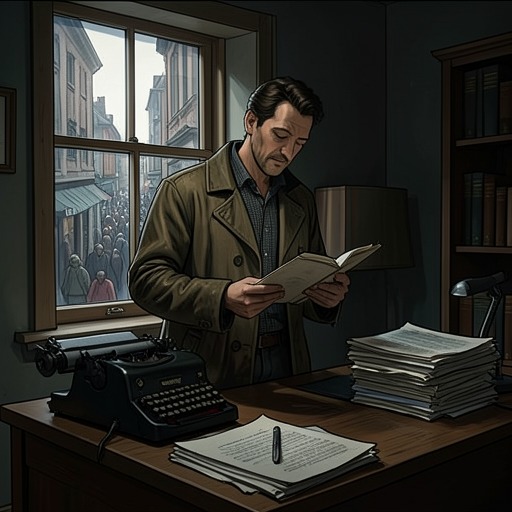
While Martin is ill and struggling to find work, a letter from White Mouse is read aloud to him. The magazine offers forty dollars for all serial rights to The Whirlpool, provided he accepts its proposed alterations. Its editor judges that Martin has not handled the story’s idea properly, but considers the idea original enough to buy if the story is cut by one-third.
Martin immediately agrees to the revision, telling the editor to cut the story down as much as desired and send the money. His response treats the requested changes as a small price for a definite sale. The offer is not simply an expression of editorial approval: it is conditional on altering the manuscript and transferring all serial rights.
Payment and Its Significance to Martin
After sending his reply, Martin works out what the offer means in practical terms. The Whirlpool is three thousand words; reduced by a third, it would be two thousand. At forty dollars, that comes to two cents a word, and White Mouse pays on acceptance. Martin compares this with the Transcontinental, which paid one cent for ten words, and concludes that White Mouse’s rate is twenty times as high. He later receives the forty dollars, confirming that the offer results in actual payment.
That money becomes a measure against which Martin judges the literary market. He had considered White Mouse an inferior publication, yet it has offered a much better rate and more reliable terms than the outlet he had rated highly. The contrast exposes how little his assumptions about a magazine’s standing tell him about its treatment of writers.
Effect on Martin’s Writing Plans
The sale changes Martin’s immediate plans as he recovers. He decides not to search for a job, reasoning that stories like The Whirlpool could earn more than ordinary employment. He imagines building a list of magazine patrons, setting aside the hack-work he considers wasted effort, and devoting himself to what he regards as better writing. His joy at the acceptance is sharpened by Ruth Morse’s absence; when he finds her letter among those on his bed, he rereads it with affection.
White Mouse also sustains Martin’s confidence later, when his machine-made newspaper storiettes help him redeem pledges, pay most of his bills, and replace his bicycle tires. He anchors his hope in the forty dollars he has received and expects first-class magazines to pay at least as well. Yet his ambitious stories, essays, and poems continue to go begging among those publications. The offer therefore gives him proof that a story can be bought and paid for, but it does not open the editorial doors he most wants to enter.
Place in the Literary Marketplace
White Mouse’s importance in the novel is specific but decisive: it offers Martin a comparatively favorable transaction at a moment when financial need and repeated rejection threaten his writing career. The terms make editorial selection visible as a negotiation over both the work and its rights, while payment on acceptance distinguishes the magazine from the slow or unreliable dealings Martin encounters elsewhere.
The result is not a general triumph over the publishing system. Martin’s renewed faith rests on one accepted story and one payment, even as more prestigious magazines continue to reject his work. White Mouse thus marks a brief, concrete opening in an otherwise obstructed path: it shows Martin that his writing can have commercial value, while leaving unresolved whether the market will recognize the work he considers most important.